Trinity College / Duke's East Campus
Submitted by gary on Mon, 08/22/2011 - 2:30pm

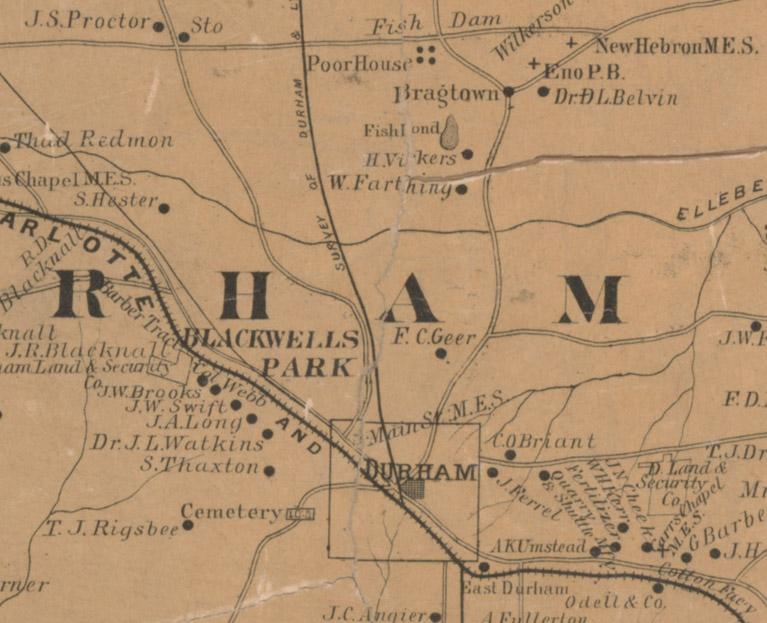
1890 Map showing Blackwell's Park
The land that would become the Durham site of Trinity College, later East Campus of Duke University, is first noted in Durham history as a horse racing track and occasional fairgrounds, known as Blackwell's Park. The 67.5 acres was acquired by James W. Blackwell in 1880-1 from Archibald Nichols and developed as a racetrack. By 1886, JW Blackwell had given up ownership to his brother WT Blackwell, of Blackwell's Bull Durham Tobacco Company. Blackwell was bankrupt by 1888 due to the failure of his Bank of Durham; whether he sold it to Julian Carr or Carr took the land as payment for debt is unknown.
The Park was described by the News and Observer in 1890:
"The Blackwell Park at Durham, where Trinity College will be located, is one of the finest pieces of property in the State. I had no idea what a magnificent site and fine grounds the college had until Brother B.N. Duke took me over them. There is 62 1/2 acres upon which $40,000 has been expended in improvements of various kinds. There are a number of neat cottages scattered around over the grounds, four fine wells of water, a large building used as a grandstand, and a fine drive made for a track to try the speed of horses, and within this circle is the finest grounds for athletic sports to be found anywhere. There is a fine orchard on the grounds, and grape vineyard, a large stable (two of them), and a hennery. In fact, there is every appliance for a truck and dairy farm. Then there is a grove of young oaks, large enough to make an excellent shade, on another part of the grounds."
In the 'Carr-washing' of Duke and Durham that seems a progressive trend in the popular history of our city (i.e. "Durham: A Self-Portrait",) Carr's role in bringing Trinity College to Durham has sometimes been minimized or forgotten.
Carr had become a financial supporter of Randolph County's struggling Trinity College a few years prior to the point at which he acquired Blackwell Park; he began supporting the college with two other trustees ( 1855 Trinity Alumnus and banker Colonel John Wesley Alspaugh and James A. Gray, another Winston-Salem banker) in 1885. In 1887 he gave the college $10,000 in securities as an endowment to keep it afloat. His initial association with the college seems to have come about through the rather incredible story of his relationship with Soong Yao-ju, otherwise known as 'Charlie Soon'. That story deserves its own telling on this site, but not here. After becoming Soong's patron, and paying his way to Trinity, Carr seems to have increased his support of the struggling college.
Trinity College had arisen from Brown's Schoolhouse, a small 16 x 20 ft log cabin in Randolph County, established around 1830. Brantley York, a Methodist preacher, became head of the schoolhouse in 1837. He moved the school to a new, larger building "some distance from the old [one]." In 1840, the school was enlarged and renamed the Union Institute, and in 1841, it incorporated and became the Union Institute Academy. It became well known under the leadership of Braxton Craven, who headed the school after 1842, and a town, named Trinity, NC, grew around the school. In 1851, the Union Institute Academy was incorporated as Normal College, a state teachers' college. In 1853, the college received funding from the state and was empowered to grant other, more general, college degrees. Curricula included "preparatory, classical collegiate, and English."
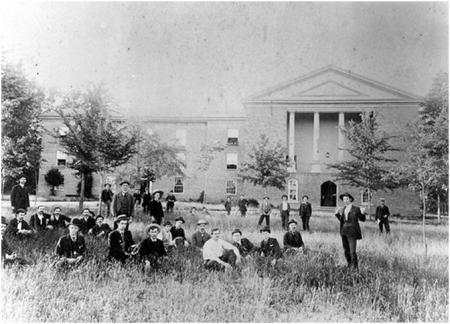
In 1855, a single, all-purpose brick masonry structure was built to house the college, and the next year the school was 'adopted' by the Methodists. The college no longer focused on teacher education and expanded its liberal arts curriculum. One of the trustees, R. T. Heflin, suggested that the college’s name be changed to Caswell, in honor of Governor Richard Caswell, a Revolutionary War hero and devout Methodist. However, when the charter was amended in 1859, the institution changed its name to Trinity College, in honor of the institution in Cambridge, England. Braxton Craven was named first president of Trinity. The school briefly closed its doors in 1864, under occupation by Union troops, but Craven returned to re-open the school in January 1866. The main building was expanded between 1872-1874 with a wing that fronting the road which is now NC62. The new wing set at a cross-angle to the 1855, forming a T. The new wing contained classrooms and a chapel.

Trinity College, Trinity, NC.
Craven remained president of the school until his death in November 1882.
See the original site of Trinity College in Trinity, NC on a Google Map
Carr became chairman of the search committee seeking a new president for the college, and played a strong role in the eventual choice of John Franklin Crowell. Although Crowell's northern heritage and Yale degree would seem at odds with Carr's southern proclivity and the situation of the college, Carr had high aspirations for the institution, and Crowell came highly recommended by Carr's good friend at the University of North Carolina, Horace Williams, despite the fact that Crowell was only 29. (Williams and Crowell were classmates at Yale.) Although the secondary sources suggest that Carr was initially against Crowell's later desire to move the school to a more urban location, I rather doubt that the savvy Carr didn't foresee this.
The Methodist Conference agreed at its 1887 convention to endorse relocation of the college. They concluded that the cost of the move, new site, and erection of a new building would be $20,500.
Crowell began to solicit interest from various North Carolina cities; Raleigh offered the school $35,000 for the move to a location currently occupied by NC State, and the Methodist Conference approved the move to Raleigh.
Durham - having lost the Baptist's Female Seminary (later Meredith College) to Raleigh despite offering more money - and wounded by the disdain with which the Seminary and Baptists had regarded "pushy little" Durham, calling it "no fit place for innocent girls to abide in" - would not go easily into the good night. The story of how Carr and the Dukes came together to bring Trinity to Durham seems to vary in every account, but clearly the tobacco rivals either saw this as an important opportunity which transcended their competition, or neither wanted to be outdone by the other - or both.
The one thing the Carr and the Dukes had in common was that they were easily the most prominent, and richest, Methodists in Durham (if not a much larger geographic area.) Robert Bumpas, minister of the Main Street Methodist Church, built by the Dukes, and EA Yates, presiding elder of the Durham District of the Methodist Conference, implored the Washington Duke to intervene on Durham's behalf.
Jean Anderson, quotes Bumpas' recollection, written to Ben Duke in 1898:
"I have thought of the day I went to your house after dinner and found you lying on the lounge in the hall, and you told me you were thinking of buying [Blackwell] Park and building an orphanage for the Methodist Church [on the site]. When I suggested that you have Trinity College moved to Durham, you agreed to consider the matter."
Per the Duke Archives and Robert Durden:
When Washington Duke's former pastor and then District Superintendent E. A. Yates told Duke of Raleigh's offer Duke casually remarked that Durham could match that and add $50,000 for endowment. Yates inquired if he could wire Crowell such an offer and immediately the college president was in Durham personally meeting Washington Duke for the first time. With a pledge from Duke of $85,000 in hand, Yates and Crowell hurried across town to ask their friend Julian S. Carr, long-time trustee and the largest benefactor of the college to date, if he would donate as a site the fair ground he owned on the western edge of the city. Carr agreed without hesitation, conveying to Washington Duke, 'I shall ever feel proud to point to you as a fellow townsman..."
When called to meet in Durham on March 20, 1890, the trustees accepted the offers from Duke and Carr with gratitude. The formal offer from Duke was signed by Washington but written by Benjamin. As further inducement, citizens from Durham presented a check for $9,361 for endowment and the trustees enthusiastically proclaimed that with Duke's gift for endowment and a building, funds were ample for a solid beginning. Upon request a committee from Raleigh relinquished its claim and the Christian Advocate, the official organ of the church, proclaimed, 'All Methodists could write the address Trinity College, Durham, North Carolina with pride.'
Crowell referred to the move as "placing the college upon the highway to success in the service of humanity."
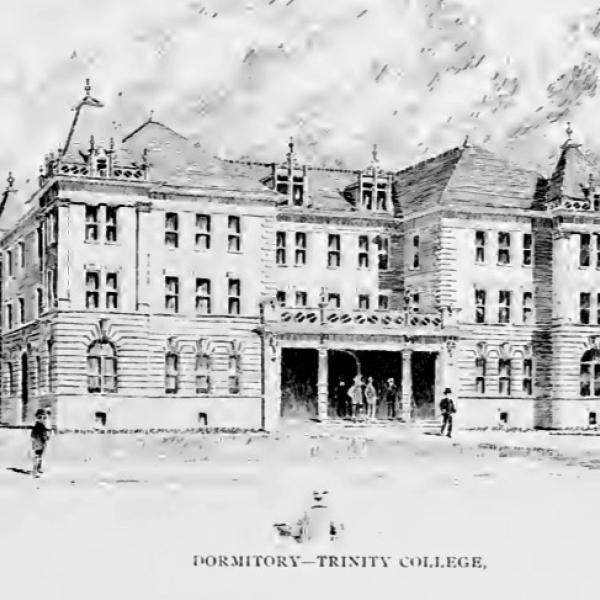
Planning soon began to erect buildings on the former park and racetrack. Washington Duke headed the building committee, but Ben Duke bore most of the responsibility for his aging father. The original campus consisted of three campus buildings: the College (Main Building,) College Inn, and the Technological Building, which also contained the generator for the campus. The college also constructed five houses for professors just to the south of the College Inn, collectively known as Faculty Row. Some accounts refer to a sixth house on campus that was existing and renovated - this may have been the Edwards/Robertson house (who lived in the house or what its use was earlier is not clear.)
When the Main Building was near completion in August 1891, the central tower collapsed The building needed to be rebuilt, and Trinity's move to Durham was delayed for a year.
Finally, on October 12, 1892, the opening of the college occurred:
"Trinity dedication will take place on Wednesday, October 12. The first feature of the day's program, set for 10 o' clock at Main Street Methodist Church will be the dedicatory sermon by Dr. E.E. Hass of the Christian Advocate, Nashville, Tenn. At 2:30 pm, a procession of municipal authorities and civic and military organizations will be formed in front of the post office and march to the main entrance to Trinity Park. [Changes in plans were made which appeared in a later Issue of the newspaper. The courthouse was named as the point for the formation of the procession and J .S. Burch was announced as the chief marshal.]
"On arrival at Trinity Park, the procession will be met by the trustees, faculty and students of the college. An address of welcome to the college will be delivered by Capt. E.J. Parrish on behalf of the mayor (M.A. Angier) and the people of Durham. This will be responded to by President Crowell, on the topic 'The Relation of the College to the Life of the People.' A formal transfer of the buildings and grounds to the board of trustees will be In the following order.
The main college and Inn by Washington Duke.
Trinity Park by J.S. Carr.
The technological building by President Crowell.
The furniture by Dr. F.L. Reid.
The dedicatory address by Rev. Dr. E.A. Yates.
Prayer by John R. Brooks.
Doxology.
Benedictation
All school authorities and the schools of the town are expected to participate. All benevolent organizations are invited to attend."
The Issue of the Globe three days later reported that "Everything at the college Is being put into readiness for the dedication Wednesday. Dr. E.L.. Reid, who did so much towards raising, money to furnish the several buildings spent two days here this week and the result is two elegantly appointed parlors, one In the main building and the other the college inn, parlors In keeping with the handsome exteriors and such as great institutions, like new Trinity, must have In order to compete. "The furniture in the former was donated by Messrs. Hanes brothers of Winston in memory of their father who lived In Davie County. It is a beautiful room and a fitting memorial of a good man. The fitting of the latter was made possible through the generosity of friends of Dr. Reid, and also a memorial room, it being in the memorial of Dr. Reid's, father, Rev. N.F. Reid.
Trinity opened its doors in Durham in the Fall of 1892 with an enrollment of 180 men, budgeted expenses were $17,900 for the year, and anticipated tuition revenue of $4500, with $2300 still owed from the previous term. The Dukes supported the college, and became increasingly angry at the lack of financial support for the college from their fellow Methodists of NC. They supplied $7500 a year for the first three years if the college could raise an additional $15,000 per year.
While this would not be the end of the financial strain for the college, it allowed Trinity College, Durham to stay open during its first semester with some relief of the pressure of meeting its obligations.

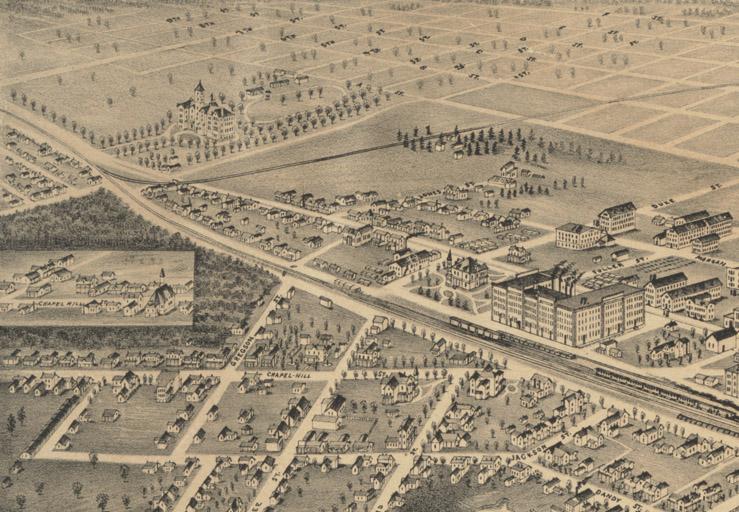
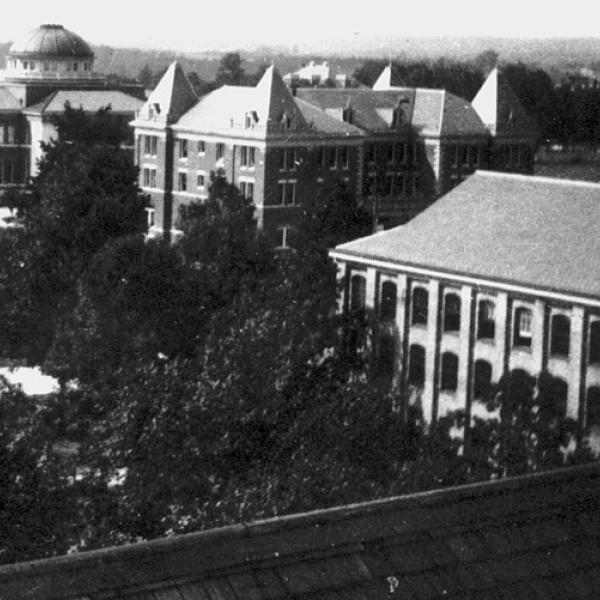
1891 Bird's Eye from downtown, showing the main buildings of Trinity College and a smattering of small frame structures.
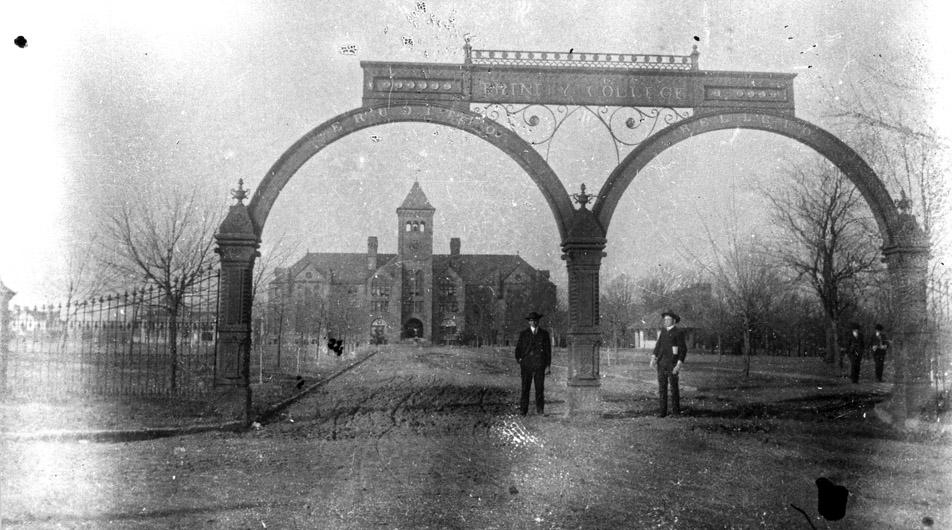
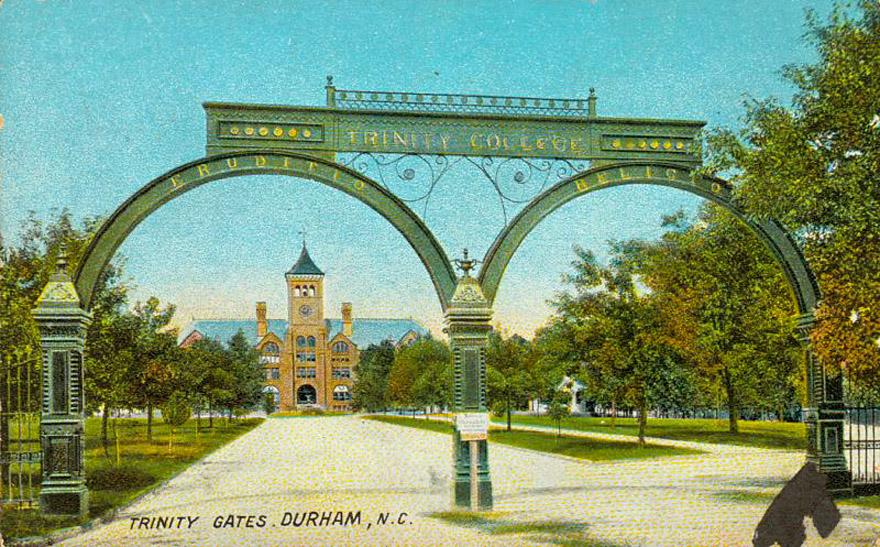
The main entrance of the college was located on the south side of the former park, on West Main St. A set of iron archways framed the entrance, with the vista terminated by the Main Building, later known as Old Main/the Washington Duke Building.

Trinity College entrance, looking north from West Main, 1904.

Trinity College entrance, looking north from West Main, 1904.

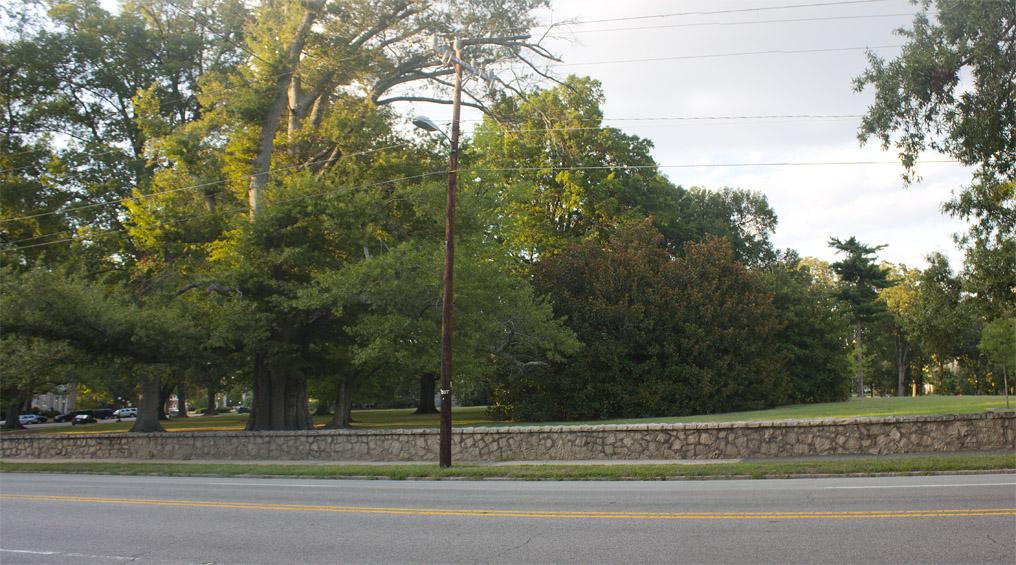
Location of the original entrance to Trinity College in Durham, 08.16.10
Back in Randolph County, the old college buildings were turned into a private college preparatory school, which became a public school in the early 20th century. In 1924 a special school tax district was established in Trinity and a new elementary school and high school building was built on the site of the college. That was in turn torn down in 1981, and the historic site is now a parking lot. The only remnants of the college - a gazebo and school bell are squeezed between NC 62 and the fence around the lot.

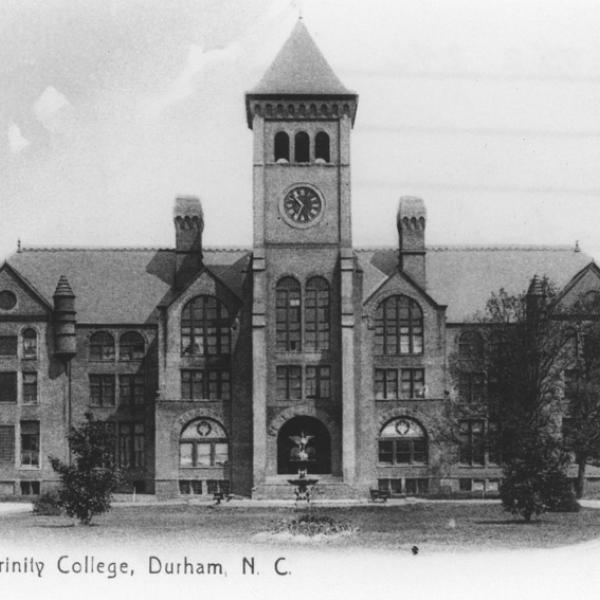
WASHINGTON DUKE BUILDING / 'OLD MAIN' - TRINITY COLLEGE
The original main building of Trinity College, home to offices, classrooms, and dormitories, Old Main's belltower sounded the changes of classes and other important events. The building was beset by tragedy at its beginning and end, but during a brief ~two decades was the heart of the campus
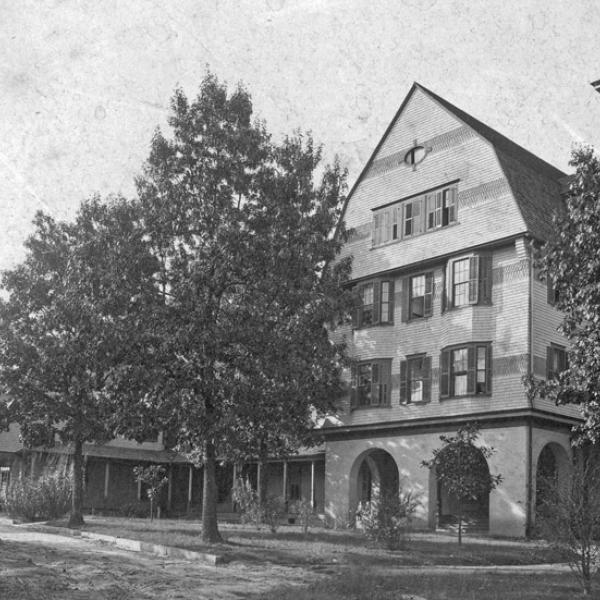
COLLEGE INN / EPWORTH INN - TRINITY COLLEGE
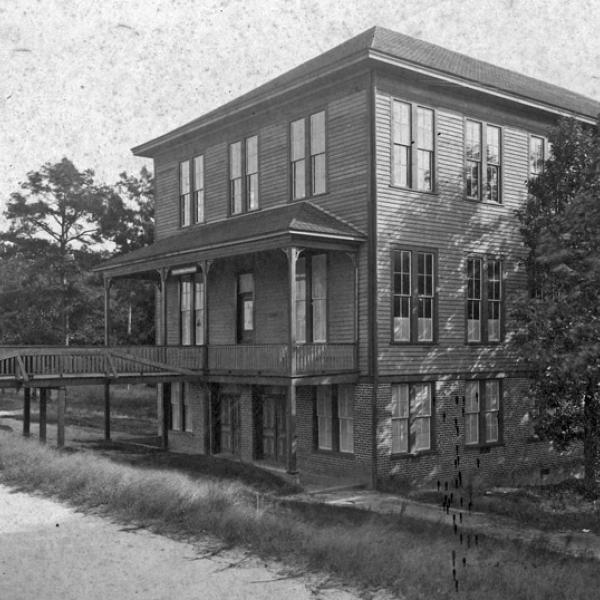
A large, rambling Shingle Style structure, the building was a center for social activity at the college, a dormitory, and hotel. The first floor contained a dining hall, parlor, chapel, and guest rooms. The second and third floors contained 75 dormitory rooms. Board was a month at the dining hall. An on-site dynamo provided electricity sufficient to provide a light bulb in every dormitory room - more than the vast majority of the city of Durham could claim at the time.
TECHNOLOGICAL BUILDING / CROWELL SCIENCE BUILDING / CROWELL HALL
One of two buildings built during the initial construction of the Trinity College campus that remains standing in its original location, the Crowell Building was initially called the "Technological Building" because it housed the School of Technology. The building housed drafting rooms, and laboratories for chemistry, physics, and biology. The main generator for the campus was housed in the basement. The building was renamed the Crowell Building in 1896 in honor of President Crowell's wife.
Multiple buildings were added to the campus between 1897 and 1905, as the college grew and outstripped the capabilities of its two academic buildings. These included a gymnasium, a library, a chapel/hall, new dormitories for women and men, and new housing for faculty. The college added a preparatory school to the northwest corner of the campus - the Trinity Park School. CC Hook, prominent Charlotte architect (and one partner of Hook and Sawyer - 1902 portfolio available here) who designed many of Durham's prominent buildings, including the Southern Conservatory of Music, the Trust Building, the Academy of Music, and Fire Station #2 would become the de facto campus architect for Trinity College during this period.

Campus Map, 1902, showing the Washington Duke Building, Faculty Row, the Flowers House, the President's House, Craven Hall, Alspaugh, the library, the Ark, and the Crowell Building.
(Courtesy Duke RBMC - digitized by Digital Durham)

Northwest from the Washington Duke Building, showing the Mary Biddle Duke Women's Building, Craven Memorial Hall, Alspaugh, the library, the President's House, the Flowers house, and Trinity Park School.

North from the Washington Duke Building, showing the Mary Biddle Duke Women's Building, Craven Memorial Hall, Alspaugh, the library, the Flowers House, and Trinity Park School. The form of the old racetrack is clear, and part of the grandstand remains visible at the northeast turn.

A similar view slightly to the east, showing the Ark and Crowell, as well as the grandstand in the distance.
ANGIER B. DUKE GYMNASIUM / 'THE ARK'
Built and furnished in 1898 with a donation from Benjamin N. Duke, the building was officially named the Angier B. Duke Gymnasium in honor of his son. The building is probably the first college gymnasium in the state. The building was the site of the second intercollegiate basketball game in the state, and should be considered the birthplace of Duke Basketball
Interestingly - for a one-time rural tobacco farmer in the late 19th century - Washington Duke was a strong believer that Trinity should provide women equal educational opportunities to men. In a December 5, 1896 letter to the Eastern Methodist Conference, Washington Duke offered the College $100,000 to become a co-educational institution, stipulating that Trinity "will open its doors to women placing them on an equal footing with men.". Trinity had matriculated and graduated women prior to its move to Durham, as early as 1878 - and women attended the school during its early years in Durham; four women were close to graduation when Duke made his gift. However, they were not allowed to hold residence on campus.
Duke's gift and language attracted national attention - 24 years before women were finally given voting rights nationally; he was even offered a vice-presidential position in a national suffrage organization. (He declined.)
Duke's gift and conditions were accepted by the Board of Trustees in spring of 1897, and the Mary Duke Building was constructed on campus to house the female students, who arrived "in numbers" for the fall semester, 1897.
After the death of Washington Duke, James B and Ben N. Duke continued to seek the expansion of women's access to education at Trinity. By 1904, women still comprised only 10% of the student population of Trinity. That year, the Duke brothers offered land valued at $50,000 "west of Trinity Campus" and $50,000 cash if the Methodists could raise another $50,000 to create a true Women's College on campus. (This piece of land is also described as "the site known as the Tom Lyon place between the NC Railroad and the macadam road just west of Trinity College.") A group of citizens attempted to raise $20,000 of the $50,000 for the Methodists; the effort failed. The Durham Chamber of Commerce took up the cause in the name of economic development from growth of the student body, also stating "It is proposed to have a college that will be the greatest of the kind ever inaugurated in the south in behalf of higher education for the woman. Sometime within the near future it is expected that the announcement will be made that this is a certainty."
Their effort failed as well, and there would not be a true 'Women's Campus' until 1926.
MARY DUKE BUILDING / WOMEN'S BUILDING
Built in 1896 after Washington Duke's gift of 0,000 to establish equal education for women at Trinity, the Mary Duke Building was the first dormitory to house women. However, the dorm was finished so quickly it provided more beds than there were female students. President John C. Kilgo quietly picked suitable senior men to share the facility. A professor's wife wrote her daughter, 'Dr. Kilgo has put boys in the Woman's Building so you see it has come down to a mixed boarding house already. If my girl was there I would take her away.'
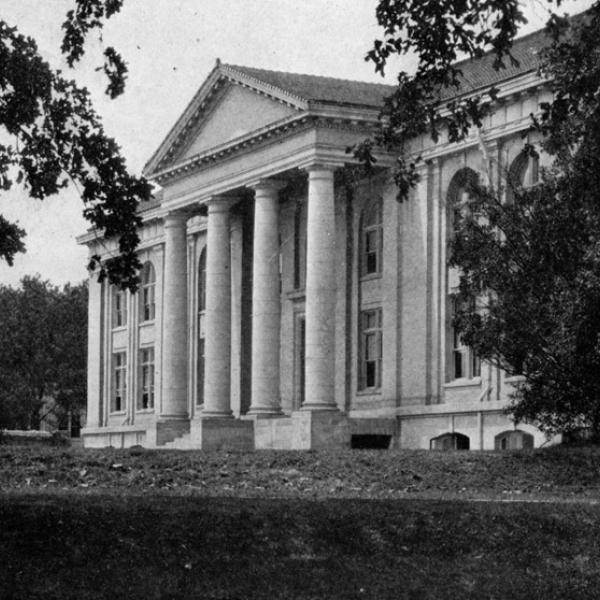
CRAVEN MEMORIAL HALL
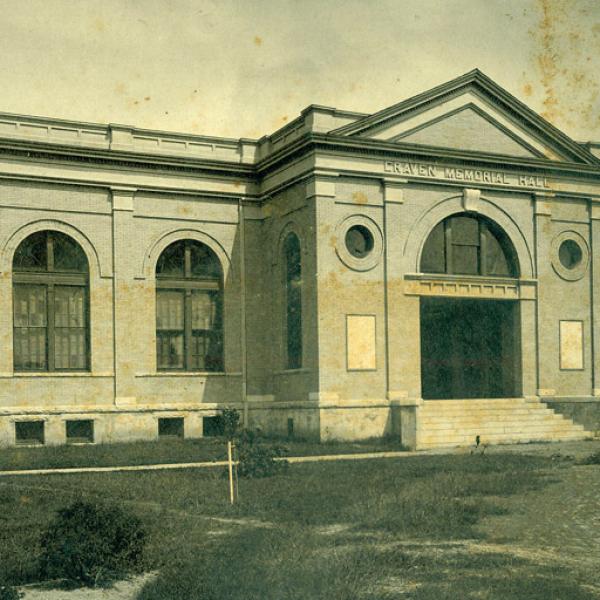
Craven Memorial Hall was part of the significant expansion of Trinity College that took place around the turn of the century. Prior to its construction, chapel services had been held in the College Inn. Craven was used for performances and commencement as well - thus its more generic name, but it is labelled in a 1910s Trinity Annual as simply "Chapel."
TRINITY COLLEGE LIBRARY
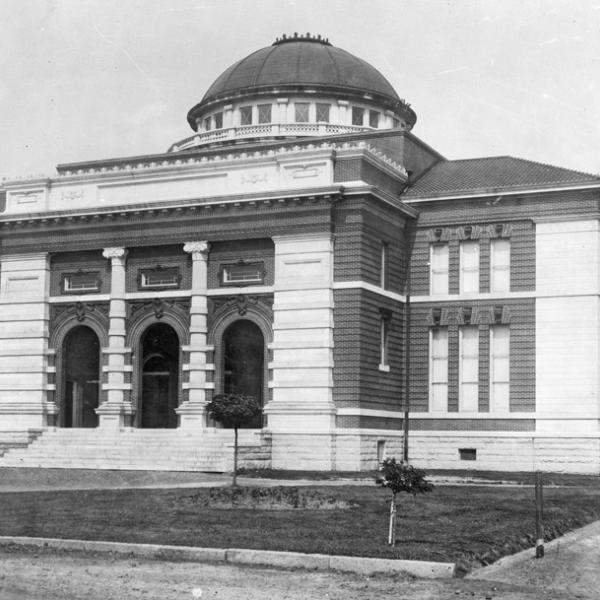
In 1900, James B. Duke donated funds for a library building. The building was designed to hold 100,000 volumes. The formal opening took place in February 1903. The college's library holdings numbered 15,000 volumes; Duke donated an additional ,000 to purchase books for the library.
NORTH DORMITORY / ALSPAUGH (1902-1926)
North Dormitory was built in 1902 to expand housing for male undergraduates. It was called North Dormitory until 1912, when it was renamed Alspaugh in honor of Colonel Alspaugh, at the time the oldest living alumnus of Trinity College (1855) and evidently a large financial contributor to the college.
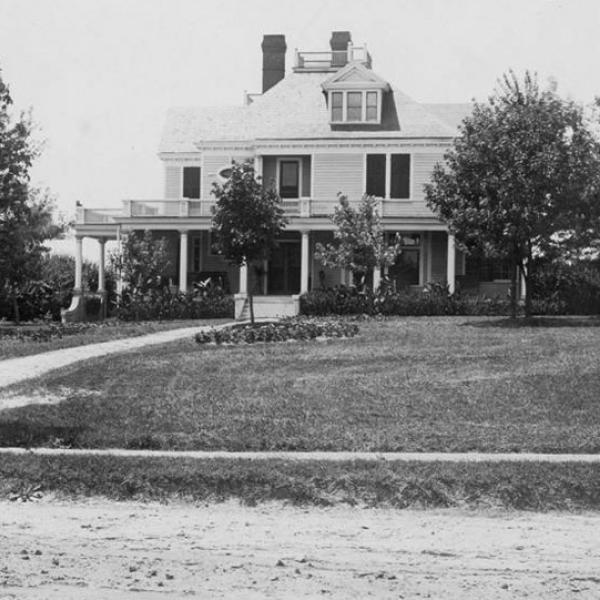
ROBERT FLOWERS HOUSE
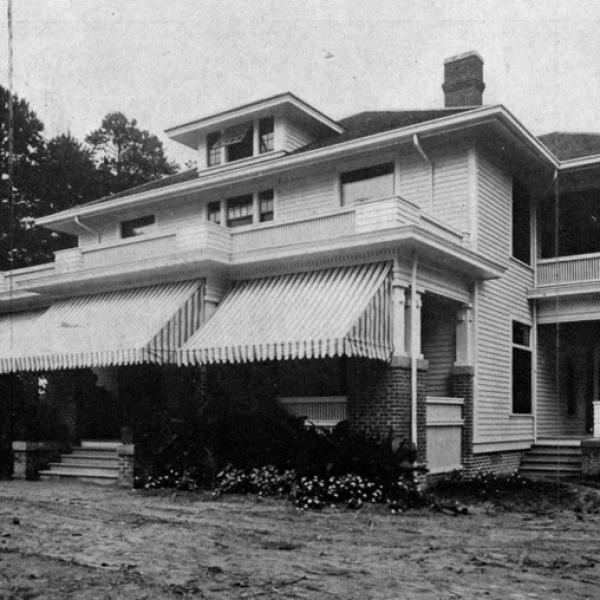
Robert Flowers was one of a handful of faculty who moved with Trinity College from Trinity to Durham, teaching electrical engineering and mathematics. Demonstrating the all-hands-on-deck mentality of a Naval Academy graduate, Flowers wired the new Durham campus for electricity himself. In the first decade of the 20th century, he built a house on campus, designed by CC Hook.
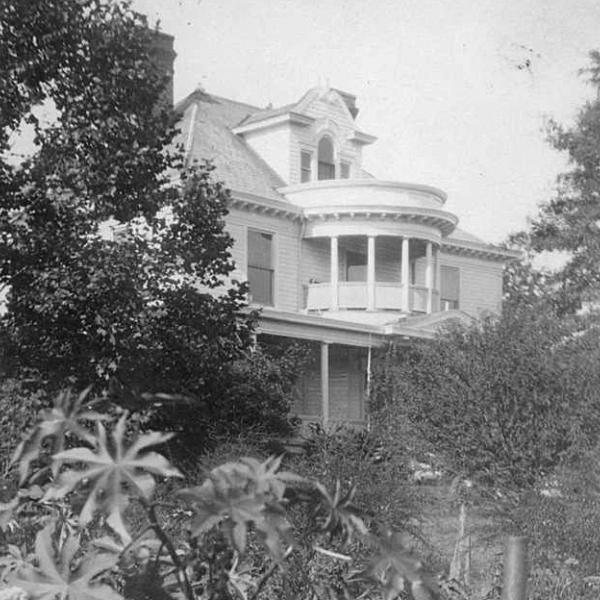
PRESIDENT'S HOUSE
Little information is available regarding the President's House, or what function it served after the construction of the President's house at the entry to Duke's West Campus in the 1920s. It was likely designed by CC Hook and built contemporaneously with the Flowers House.
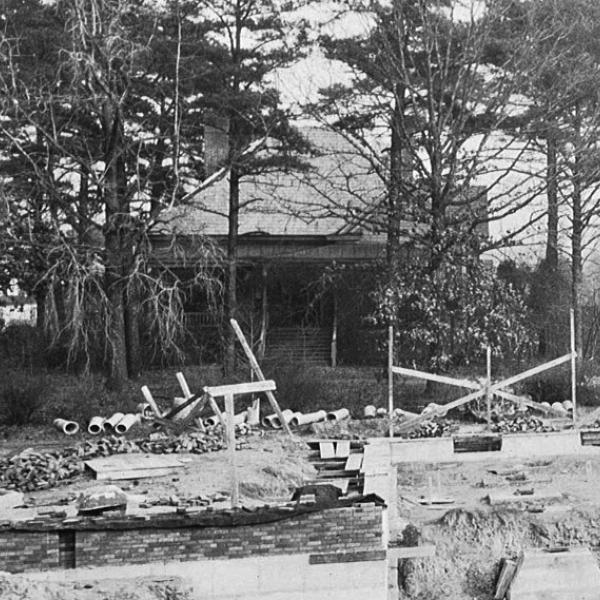
EDWARDS / ROBERTSON HOUSE
There is little to no information available about the Edwards/Robertson house. It is labelled as "Prof Edwards" house on the 1902 map above, and as "Robertson House" on the 1937 and 1950 Sanborn maps.
ANNE RONEY FOUNTAIN
The Anne Roney Fountain originally was situated in a prominent position directly in front of the Old Main / Washington Duke Building. Roney was the sister of Artelia Roney, Washington Duke's second wife. Anne helped Duke raise his children after Artelia died, and was housekeeper at Fairview, his house on the southeast corner of South Duke St. and West Main St..
WASHINGTON DUKE STATUE
Commissioned after the death of Washington Duke in 1905, and created by Edward V. Valentine, who has design a well-known seated statue of Robert E. Lee, and a statue of Thomas Jefferson at UVA, the Washington Duke statue is well-travelled - and is rumored to be capable of standing.
BISHOP (KILGO)'S HOUSE / FACULTY CLUB / INFIRMARY
Built as a residence for Methodist Bishop and former Trinity College President John Kilgo, the Bishop's House later became a Faculty Club, and during the mid-20th century served as the infirmary. It currently serves as the center for Continuing Education at Duke.
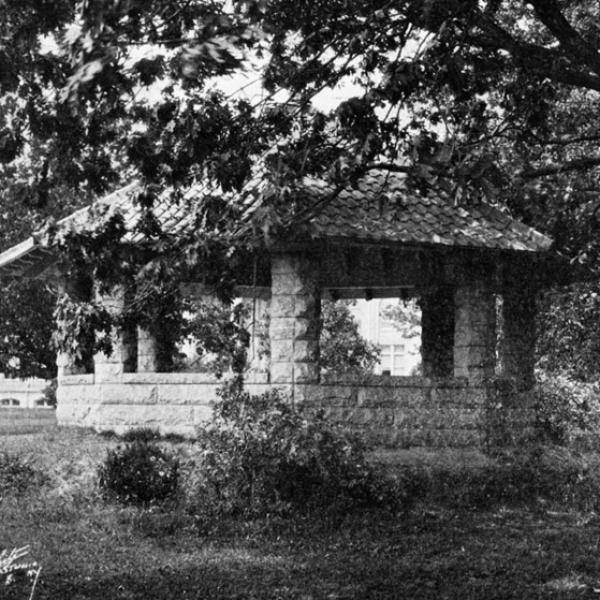
STAGG PAVILION
Built in 1902 with a donation of funds from Mrs. Mary Lyon Stagg, a daughter of Mary Elizabeth Duke Lyon, who was a sister of James and Benjamin Duke, the Stagg Pavilion bears a resemblance to the Rotary Park pavilion, built in 1916, and now located at Bennett Place
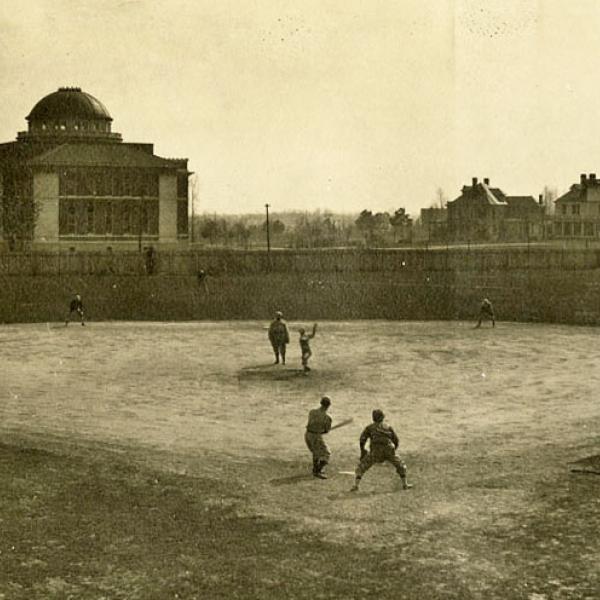
HANES FIELD / WILLIAMS FIELD / JACK KATZ STADIUM
Hanes Field, named after John Wesley Hanes, who started the Hanes Hosiery Company in Winston-Salem in 1901, was the primary athletic field for both baseball and football at Trinity College - it appears to have been built in the mid-1910s.was a well-regarded facility - so much so that it was used for spring training by Boston in 1899, by the Durham Bulls upon the re-establishment of their club in 1913, and by the Trinity College Roosters.
Trinity College matured as an institution during the first decade of the 20th century, becoming a fast-rising star in the academic world. It achieved national prominence / notoriety in 1903 during the Bassett Affair, which would come to be seen as a progressive and brave stance for academic freedom, one which made the academic world take notice, and put Trinity on the national stage.

T. Roosevelt speaking on his railroad car with the Washington Duke building behind him, 1905.
A second period of major construction and expansion occurred on the campus ~1910-1912, directed by architect CC Hook. This would involve moving the entrance of Trinity College westward to intersect with Craven Memorial / the long axis of the racetrack oval. (The previous entrance and its relation to the racetrack oval is best appreciated in the 1902 map of campus above.

Trinity Entrance, ~1911. West Duke is complete and East Duke is near completion. The Mary Duke building is still visible in the background and the wall has not been constructed around the campus.

New entrance to Trinity College, ~1916. Jarvis is visible in the background, and the wall around the campus is completed.
Thematically, the architecture would be a combination of the neoclassical East and West Duke Buildings - framing the entry to the campus and providing new administration/academic space, and the more eclectic (I'd say quasi-Renaissance Revival) Jarvis and Aycock dormitories immediately to the north of the East and West Duke buildings. Green tile roofs, white pressed brick and Indiana limestone were used throughout. These four buildings formed 3 sides of a square, open to the north with Craven in the center of the fourth 'side' as the southern point of the Alspaugh, Library, Craven triangle of buildings. Hook intended the quadrangle formed by these buildings to be used for social space, and termed this the 'Yard' - likely in emulating Harvard Yard
EAST DUKE BUILDING
The East and West Duke Buildings were under design before the Washington Duke Building burned in 1911; the plan was already being developed to demolish Old Main and replace it with two new academic and administrative buildings. East Duke served as the administration building for Trinity College and, later, for the Women's College.
WEST DUKE BUILDING
The West Duke Building contained the college barbershop, bookstore, post office, and held a theater in the basement. The psychology (and parapsychology) departments were located on the 2nd floor after 1935.
AYCOCK DORMITORY
Named for North Carolina governor Charles Aycock (1900-1904) Aycock was built as a one of a pair of dormitories (with Jarvis) that framed what architect CC Hook called "The Yard."
JARVIS DORMITORY
Named for North Carolina governor Thomas Jarvis (1879-1885), Jarvis was built as a companion dormitory to Aycock, across what architect CC Hook called "The Yard."
THE SOWER
The Sower is one of several statues James B. Duke bought for his New Jersey estate. The Sower was located at Duke Farm until 1914, when Trinity president John Kilgo mentioned to Duke that he admired the statue; Duke sent the statue to Durham, and Trinity placed the Sower in front of Craven Memorial Hall.
In 1916, the Faculty Row houses were removed to points off campus, and a stone wall was constructed around the perimeter of the campus (with the exception of Hanes Field, which retained its brick wall.) The campus had grown significantly, and contained three distinct architectural 'areas' - the remaining original 1890s buidings, along the eastern side of the original racetrack, the three circa-1900 buildings within the oval of the racetrack, and the four circa-1910 buildings framing the Yard.

Northeast view of the Trinity College Campus: East and West Duke, Jarvis, and Aycock form a squared entry to the campus, with the triangle of Craven, Alspaugh, and Library immediately to the north, within the old racetrack. The older Angier Gym, Crowell Building, and Epworth are to the east. The President's house and Flowers' house are in the foreground, to the west, and the Kilgo/Bishop's house in the background to the northeast. Goalposts are visible in the northern part of the oval, attesting to its use for sports.

Similar view of the campus, looking eastward.
At the subsequent decade mark, only two new buildings would be added to the campus, but a major overhaul was impending.
SOUTHGATE DORMITORY
The people of Durham raised funds through a subscription drive to build Southgate dormitory, and name it in honor of James H. Southgate, Chairman of the Trinity Board of Trustees. Then Trinity President William Preston Few issued this statement regarding the fundraising drive to construct the building
ALUMNI MEMORIAL GYMNASIUM / BRODIE RECREATION CENTER
Built in 1922-3, opened in 1924, and named as a memorial to Trinity College students who died in World War I, Memorial Gym cost 0,000 to build. The gym served as a replacement for the Angier B. Duke gymnasium, and ,000 was provided by Angier (who graduated from Trinity in 1905) and his sister Mary.
The story surrounding the massive gift that would transform Trinity into Duke University is often told in such brief form that it seems a philanthropic-minded James B. Duke simply chose a college out of a random assortment in order to rename it with the Duke name. As is clear from the history above, the Duke family had given significant amounts of money to build and sustain Trinity College after its move from Trinity, NC to Durham - over a period of 30+ years prior to JB Duke's gift. I think this brevity also gives rise to the apocryphal stories of Duke being initially turned down by Princeton or fill-in-the-blank college.
So the gift, while massive and transformative, was the culmination of a familial effort that had, to that point, been more the province of Washington and, subsequently, Ben Duke than James "Buck" Duke. JB Duke had left Durham for New York City in the 1884 - he who later owned houses in Charlotte, Newport, and New York City never appears to have owned a house in Durham. Focused with great intensity on building the American Tobacco Company, textile mills, and the Southern Power Company (later Duke Power,) James B. Duke paid only moderate attention to the affairs of Trinity College or of Durham-as-city - and generally only using his brother Ben as a conduit - until the late 1910s.
After Ben became progressively more ill in 1917, he moved to Florida to attempt recuperation. His strong relationship with Trinity president William Preston Few had been one that Few had relied on to provide financial sustenance for the college. With Ben out of Durham and more difficult to interact with, Few began to try to build a more direct relationship with James B. Duke. JB Duke seems to have responded to the illness of his brother, with whom he was as close as JB Duke was to anyone, with a sense of some new responsibility to attend to charitable causes.
This was no easy task, and Few still relied on Ben and tobacco executive Clinton Toms frequently to act as go-betweens. Few seized upon the idea pushed by George Watts to establish North Carolina's first four-year medical school at Trinity, with Watts Hospital as its base. The idea foundered, particularly after the death of Watts in 1921, and the legislature's move to establish a 4 year medical school at UNC in 1922.
The correspondence between Few and Duke concerning the medical school seems to have more significantly captures Duke's attention, as he moved towards the establishment of a larger charitable foundation with support for Trinity at its core. It was Few who suggested that the college be renamed Duke University - in great part, I'm sure, by an ongoing attempt to woo JB Duke, but also, ostensibly, because there were already quite a few Trinity schools around the country and world, and a name change would distinguish a new institution.
By 1923, Duke had tasked the architect who built his house on Fifth Avenue in New York as well as some greenhouses on Duke's Farm, Horace Trumbauer of Philadelphia, with corresponding with Few to begin planning expansion of the college. Duke showed a particular affinity for the Tudor Gothic style he had seen at Princeton, and Few drew inspiration from the buildings at Bryn Mawr. They took inspiration as well from the Widener Library at Harvard that Trumbauer and his lead architect, Julian Abele had designed, as well as Johns Hopkins and the University of Virginia.
Duke gathered his family, lawyers and associates at his house in Charlotte in December 1924 and announced that he had been working on the form and establishment of a philanthropic foundation for a number of years, and that he wanted to complete it then, by working around the clock. On December 11, 1924, the Duke Endowment was established by transfer of $40,000,000 of Securities from JB Duke to the endowment. 46% was for education, 32% for hospitals (both white and African-American,) 12% to the Methodist church, and 10% to orphanages (both white and African-American.) The educational portion was subdivided with 32% was to go to support Trinity/Duke, 5% to Davidson, 5% to Furman, and 4% to Johnson C. Smith University.
On December 29, 1924, the Trustees of Trinity College accepted Duke's offer, and changed the name of the school to Duke University.
Robert Flowers initially sought land to the north of the College campus; some of the thinking may have remained that establishing a link with Watts Hospital was desirable, and that the University would grow north to West Club Blvd. Some land was acquired (now the location of Duke's Trinity Heights development,) but the price of the remaining land necessary skyrocketed with news of the endowment. Land south of the college, across the railroad tracks was examined as well, but the price was too high there as well.
Durham's landowners seeing too much green when the big entity comes calling nearly cost Durham dearly. Frustrated by his inability to acquire land near Trinity College, JB Duke was receptive to an offer of 1000 acres in Charlotte, the center of his Duke Power empire, and threatened to move the establishment of a university to Charlotte if more land was not acquired soon. Fortunately for Durham (although at a cost we continue to pay in the physical separation of the core of Duke and downtown Durham) the old Rigsbee Farm on Rigsbee Road - totaling 2400 acres - was remembered by Few from horseback riding as a young man. Flowers was able to acquire a much larger quantity of land than originally intended, cheaply - although far outside of the core of town.
Trumbauer and Abele scouted the sites and devised conceptual plans. While the new men's campus was being designed in a Gothic style from Hillsborough stone, Abele chose a colonial revival style, reminiscent of the University of Virginia, for a major redesign of the Trinity College Campus, which would be re-purposed as the Women's College of Duke University - with men and women at the rechristened university segregated by the length of Campus Drive. The Olmstead Brothers of Boston were hired as landscape architects for both campuses.
Rather soon after commencement of these plans, James B. Duke died at age 68 in New York. With his will, and the previous endowment, he gave $19 million to Duke for construction of a new campus.
Construction began in earnest in 1925. On the former Trinity Campus, the early Crowell Building, remaining College (Epworth) Inn, and the Ark, along with a few faculty houses would be retained - as would the buildings constructed during the ~1910 campus renovation: East Duke, West Duke, Jarvis, and Aycock, and the 1920s buildings: Southgate and Alumni Memorial Gymnasium.
However, the former Alspaugh, the old Library, and Craven Memorial Hall would be removed to create a continuation of the open 'quad' between Jarvis and Aycock, terminating in the Chapel (later known as Baldwin Auditorium.)
Fascinatingly, Alspaugh, Craven, and the Library were moved from the campus to historically African-American Kittrell College, in Kittrell, NC. The Duke family had supported Kittrell, which opened in 1886 and was associated with the AME church, for many years, and Ben Duke, after the movement of the buildings to Kittrell, would give the college a gift of $203,000. (Unfortunately, the buildings burned to the ground in 1972 and Kittrell College ceased to operate in 1975.)
See the former location of Kittrell College on a Google Map
Sitework and initial construction began with Craven, the Library, and Alspaugh still in place. Below, the Science building is laid out just to the east of Craven Memorial Hall, looking north from near Aycock, 12.03.25

Below, the Carr Building is laid out, just to the west of Craven and to the north of Jarvis, 12.03.25

Alspaugh - with the tennis courts and Trinity Park School in the background, 12.3.25

Beginning construction of the Union, looking northeast, 12.16.25

East Campus Library, with the Alumni Memorial Gym, Flowers House, and President's House in the background, 12.17.25

The Union and Faculty Apartments, looking east, with the Robertson House, the Ark, and Crowell in the background, 12.17.25

Construction of the auditorium, looking south, 02.01.26. The original Alspaugh, Trinity College Library, and Craven are still visible in the background.

02.15.26

Science Building, looking south towards Aycock04.01.26

Carr Building, looking south towards Jarvis, 04.15.26

Science Building, with Epworth in the background, 03.16.26

Union, 06.01.26

Brown and Bassett, 06.15.26. The railroad line brought onto Campus for construction is apparent.

Alspaugh and Pegram, 06.15.26

Library, Bassett, Pegram, 07.15.26

Union, 07.15.26

08.01.26

08.01.26

08.16.26

09.01.26

09.01.26

08.01.26

08.01.26

08.16.26

09.01.26

09.01.26

09.15.26

09.15.26

Once completed, the former Trinity College campus officially began its transition to the Women's College of Duke University. The dominant architectural feel of the campus became Georgian, with Hook's former focal point around the 'Yard' serving primarily as a traffic circulation point, and the focus shifted northward towards the Auditorium, later renamed for the woman who would become the first Dean of the Women's College, Alice Baldwin.
The transition was completed in 1930, with the installation of 'Trinity College' (the men's college) on West Campus and the Women's College on East. The Engineering School was also located on East Campus, in the former Trinity Park High School

Campus Aerial, 1940s.

Looking northwest, 1950s

1950s

1950s

Aerial of the campus, with north to the left, 1959.
CARR BUILDING - DUKE UNIVERSITY
Named after Julian Carr, the Carr building was constructed as, and remains, an academic building.
SCIENCE BUILDING / DUKE ART MUSEUM / FRIEDL BUILDING
Built as the Science Building for the Women's College, the building was renovated in 1969 to become the home for the Duke University Museum of Art. In 2004, the collection was moved to the Nasher Museum, and the building was again renovated to house "Cultural Anthropology, Literature, African and African-American Studies, Latino/a Studies, Critical US Studies, and the Duke Human Rights Center."
GILES DORMITORY
Named for three sisters (Theresa, Mary, Persis) who were the first women graduates of Trinity College (in 1878.) It serves as a dormitory.
FACULTY APARTMENTS / WILSON DORMITORY
The original faculty apartments on the Women's College campus, the building later became a student dormitory, and was renamed for Dean Mary Wilson in 1970
EAST CAMPUS LIBRARY / LILLY LIBRARY
Replacing the Trinity College Library, the East Campus Library also served as Duke's first Art Museum until the Science Building was renovated in 1969 for that purpose. It was renamed the Lilly Library in 1990 for donor Ruth Lilly, and underwent extensive interior renovation in 1993.
EAST CAMPUS UNION
The original Union / dining hall for the Women's College, the the building contained multiple meeting areas and lounges, as well as faculty dining areas. As a small note that seems lost to the annals of time, when I was an undergrad in the late 1980s, there was a fine dining restaurant that accepted 'points' (on the Duke card) in the Union called the "Magnolia Room." The building is now called 'The Marketplace' since an major interior renovation in 1995.
ALSPAUGH DORMITORY (1926- )
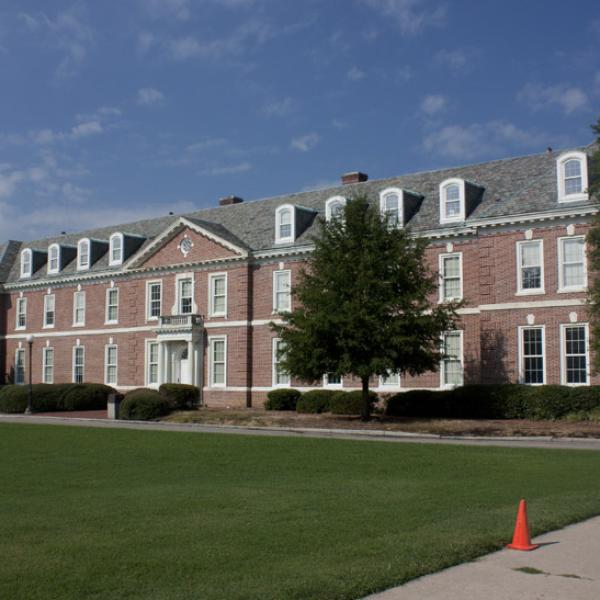
One of the original numbered dormitories, the dormitory was renamed for Colonel Alspaugh (class of 1855,) as the North Dormitory on Trinity's campus had been earlier.
BROWN DORMITORY
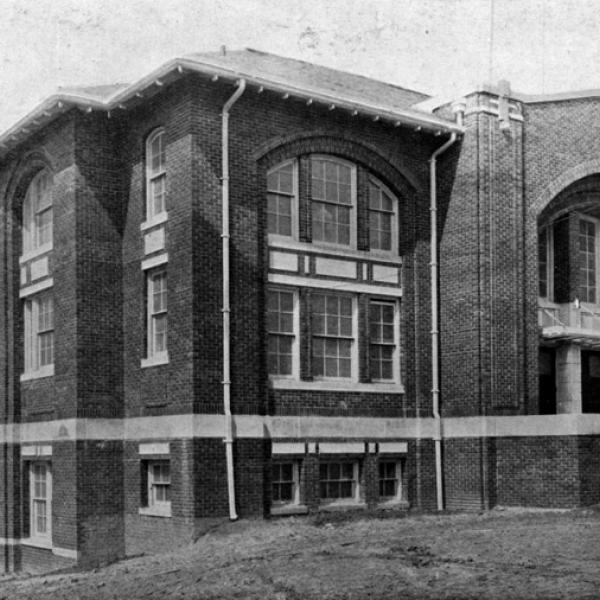
One of the original numbered dormitories, the building was re-named for trustee Joseph Brown, class of 1875, sometime between 1927 and the mid 1960s.
PEGRAM DORMITORY
A dormitory, the building was named for Professor William Pegram
BASSETT DORMITORY
A dormitory named for Professor John Spencer Bassett, most well-known for the 'Bassett Affair"
BALDWIN AUDITORIUM
Built as the focal point of the Women's College, the Auditorium was designed to sit 1400 people and was used primarily as a chapel for the college when it opened in 1927. The building is named for Alice Baldwin, who was a professor of history at Trinity, the first female faculty member at Duke, and first dean of the Women's college.
GILBERT-ADDOMS DORMITORY
Built on the former site of the President's House, Gilbert-Addoms ("GA") was built as a dormitory to house 200 women - it also featured sun decks and a cafeteria to seat 350. It was named for Katherine Gilbert, a philosophy professor at Duke from 1930-1952, and Ruth Addoms, a botany professor from 1930-1951.
INFIRMARY / ACADEMIC ADVISING CENTER
Built on the site of the Robertson House, the Academic Advising Building closely matches the Georgian Style of the 1926 campus. It initially served as a replacement infirmary, supplanting the Bishop's House, but sometime after 1972, became the Academic Advising Building, which it remains.
In 1972, the University became truly co-educational, and the Women's College as a separate unit dissolved. East Campus and West Campus simply became geographic entities, with women and men living on both.
MARY DUKE BIDDLE MUSIC BUILDING
The Mary Duke Biddle building was designed to house the music program at Duke; it made a strong break with tradition, using some classical elements within a modern framework. I must admit that I didn't much care for this building until its current renovation.
From its integration into a co-educational Duke until 1995, East Campus had a somewhat scattered identity. West Campus clearly became the epicenter of the campus social life. As a result, given West Campus' more suburban nature, Duke became further isolated from Durham. A few independent, selective dormitories with upperclassfolk, a couple of fraternities, Epworth - in a class unto itself, freshman dormitories, sophomore domitories, etc. populated East Campus, but it remained a place without a clear identity. A few classes were here, some on West. During my time on campus, from 1988-1992, East Campus was an unpopular place to be for many students - a sleepy campus without much going on.
Since the 1995-96 academic year, all freshmen—and only freshmen except for upperclassmen serving as Resident Assistants—have lived on East Campus, to build class unity. The Art History, History, Literature, Music, Philosophy, and Women's Studies Departments are housed on East. Programs such as dance, drama, education, film, and the University Writing Program also reside on East.
BLACKWELL DORMITORY
Built as part of the conversion of East Campus to a freshman campus, the name Blackwell hearkens back to the pre-Trinity College Blackwell's Park
RANDOLPH DORMITORY
Built as part of the conversion of East Campus to a freshman campus, the name pay tribute to the origins of Trinity College in Randolph County.
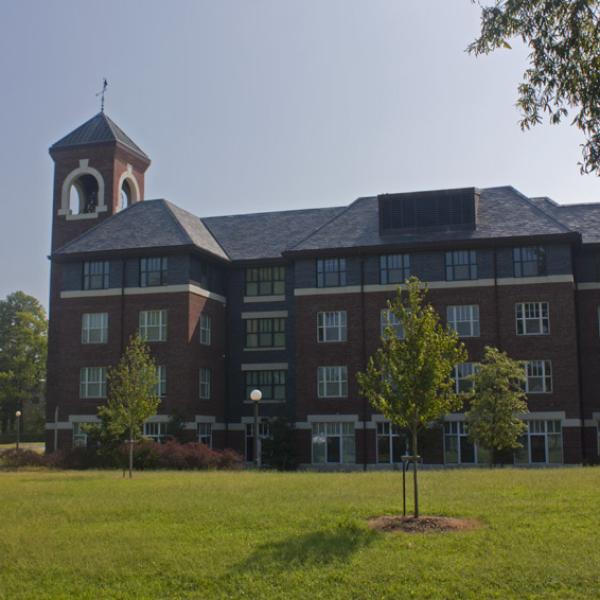
BELLTOWER DORMITORY
In an interesting continuation of the neo-historical development of East Campus, Bell Tower recreates an element of the original Trinity Campus - the belltower. Installed in the tower was the old Trinity College Bell - known as "Marse Jack" after President John Kilgo.


Add new comment